

How to Make Your Sofa Last: A Practical Care Guide for Homeowners & Hospitality Teams
A high‑quality sleeper sofa is an investment — and with proper care, it should deliver 15–20 years of reliable comfort. Most premature failures aren’t caused by manufacturing issues. They’re caused by uneven use, improper cleaning, improper movement, or skipped maintenance. This guide outlines the essential habits that protect your sofa’s frame, cushions, upholstery, and sleeper mechanism.
- The First 90 Days: Break‑In Matters
During the first three months, the sofa’s cushions, upholstery, and frame joints are settling. Consistent habits during this period prevent long‑term issues.
Best practices:
- Rotate and flip cushions weekly.
- Swap left/right cushions if they’re loose.
- Encourage guests or family members to use the full width of the sofa.
- Avoid “favorite spots” during the break‑in period.
Even distribution now prevents sagging later.
- Leather Upholstery Care
Leather is durable and easy to maintain when cleaned correctly.
Weekly:
- Dust with a soft cloth
- Wipe with a barely damp cloth
Conditioning schedule:
- Corrected‑grain leather: every 6–8 months
- Aniline/pull‑up leather: every 3–4 months
Important: Never use silicone, wax, solvents, baby wipes, or household cleaners. Address spills immediately — most leathers resist absorption if wiped within 30 seconds.
- Fabric Upholstery Care
Fabric requires more proactive protection.
Prevent fading:
- Reduce UV exposure with window treatments or repositioning.
- Apply fabric protector every 12–18 months.
Routine cleaning:
- Vacuum weekly with an upholstery attachment
- Rotate cushions weekly
- Schedule professional cleaning every 12–18 months for fixed covers
Stain response: Blot, don’t rub. Start with cold water. Use fabric cleaner only after spot‑testing.
- Frame, Suspension & Sleeper Mechanism Care
The structural components of your sofa determine its lifespan.
Avoid: Standing or sitting on arms — this stresses joints and causes frame distortion.
Support care:
- Rotate cushions to distribute load
- Sit in varied positions
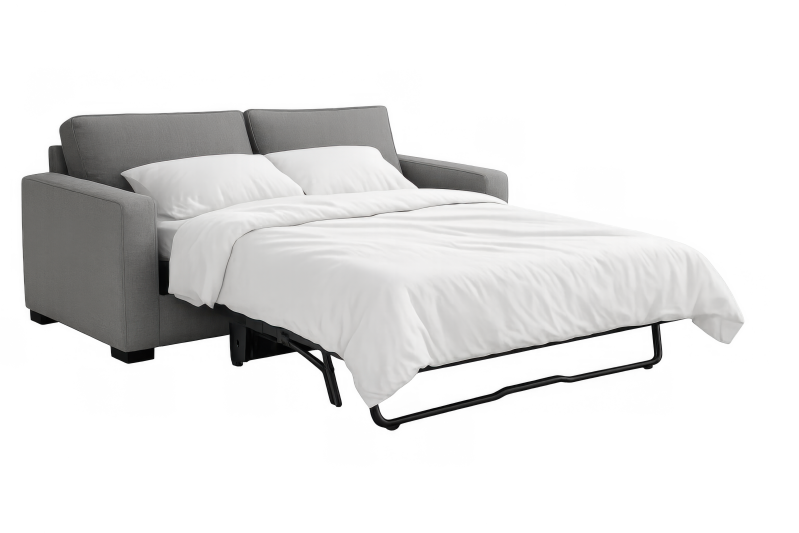
- For sleeper sofas:
- Open and close the mechanism smoothly
- Rotate the sleeper mattress regularly
These habits prevent uneven wear and extend the life of the sleeper mechanism.
- Annual Care Checklist
Monthly:
- Rotate/flip cushions
- Vacuum fabric
- Wipe leather (dry → damp)
- Inspect legs and threads
Quarterly:
- Condition leather
- Check fabric for wear or fading
- Re-test fabric protector
Annually:
- Professional fabric deep clean
- Inspect frame joints
- Polish exposed wood
- Check castors
Every 3–5 years:
- Professional leather reconditioning
- Evaluate reupholstery needs
Why This Matters for Sleeper Sofas
Sleeper mechanisms rely on balanced weight distribution and smooth operation. Cushion rotation, proper cleaning, and gentle opening/closing significantly extend the life of both the seating surface and the sleeper system.
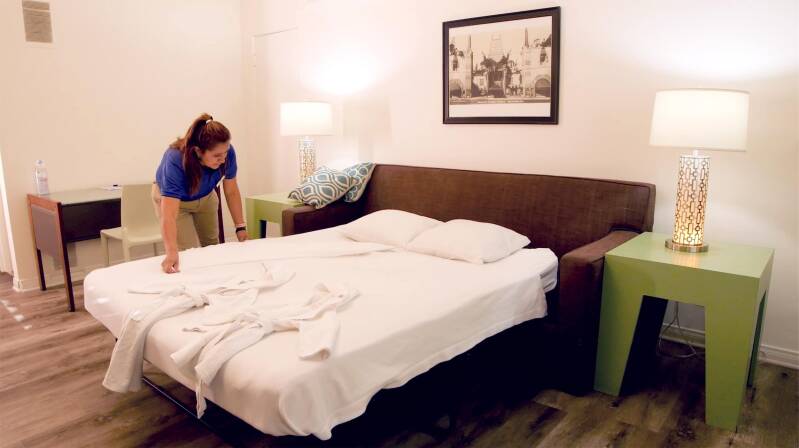
For hotels, rental properties, and high‑use environments, these habits reduce replacement frequency, lower maintenance costs, and improve guest satisfaction.
Sleeper Mattress Care — Comfort, Hygiene & Longevity
Sleeper sofas introduce an additional component that needs routine attention: the mattress. Whether used daily or only for guests, proper care ensures comfort, prevents premature sagging, and protects the sleeper mechanism itself.
Rotation & Positioning
Sleeper mattresses experience concentrated pressure in the same areas, especially when folded inside the mechanism.
- Rotate the mattress every 1–2 months to distribute wear evenly.
- If the mattress is reversible, flip it every 3–4 months.
- When closing the sleeper, ensure the mattress is lying flat with no folds or bunching — trapped fabric accelerates wear and strains the mechanism.
Support & Surface Care
The sleeper deck and support bars directly influence mattress performance.
- Check the support deck annually for alignment or loosened fasteners.
- If your sleeper uses a trampoline‑style deck, inspect the mesh for sagging.
- For bar‑style supports, consider a thin mattress topper to improve comfort and reduce pressure points.
Cleaning & Hygiene
Sleeper mattresses often stay folded for long periods, which can trap odors and moisture.
- Air out the mattress quarterly by leaving the sleeper open for several hours.
- Use a vacuum with an upholstery attachment to remove dust.
- Spot‑clean with cold water and a mild fabric cleaner, following the same blot‑don’t‑rub rule used for sofa fabrics.
- For high‑use environments (guest rooms, rentals), use a washable mattress protector to extend lifespan and simplify cleaning.
Guest‑Use Best Practices
If your sleeper is used frequently:
- Encourage guests to avoid sitting on the edge of the open mattress, which stresses the hinge area.
- After each use, inspect the mattress for impressions and rotate if needed.
- Allow the mattress to fully dry and air out before folding it back into the mechanism.
Replacement Timeline
Even with proper care, sleeper mattresses typically have a shorter lifespan than the sofa itself.
- Replace every 5–7 years for regular use.
- Replace every 3–5 years in hospitality or rental settings.
- If you notice sagging, uneven compression, or discomfort, replacement is more effective than attempting repairs.
#SleeperSofaCare #SleeperMechanism #SofaCareGuide #UpholsteryCareTips #ExtendFurnitureLife #SleeperMattressCare #FurnitureCareGuide #SofaBedMaintenance #LeatherCareTips #FabricCareTips #HowToCareForYourSofa #PreventSofaSagging #SofaCleaningTips #SofaCareAndMaintenance #BestSofaCarePractices #KeepYourSofaLookingNew
Create Your Own Website With Webador